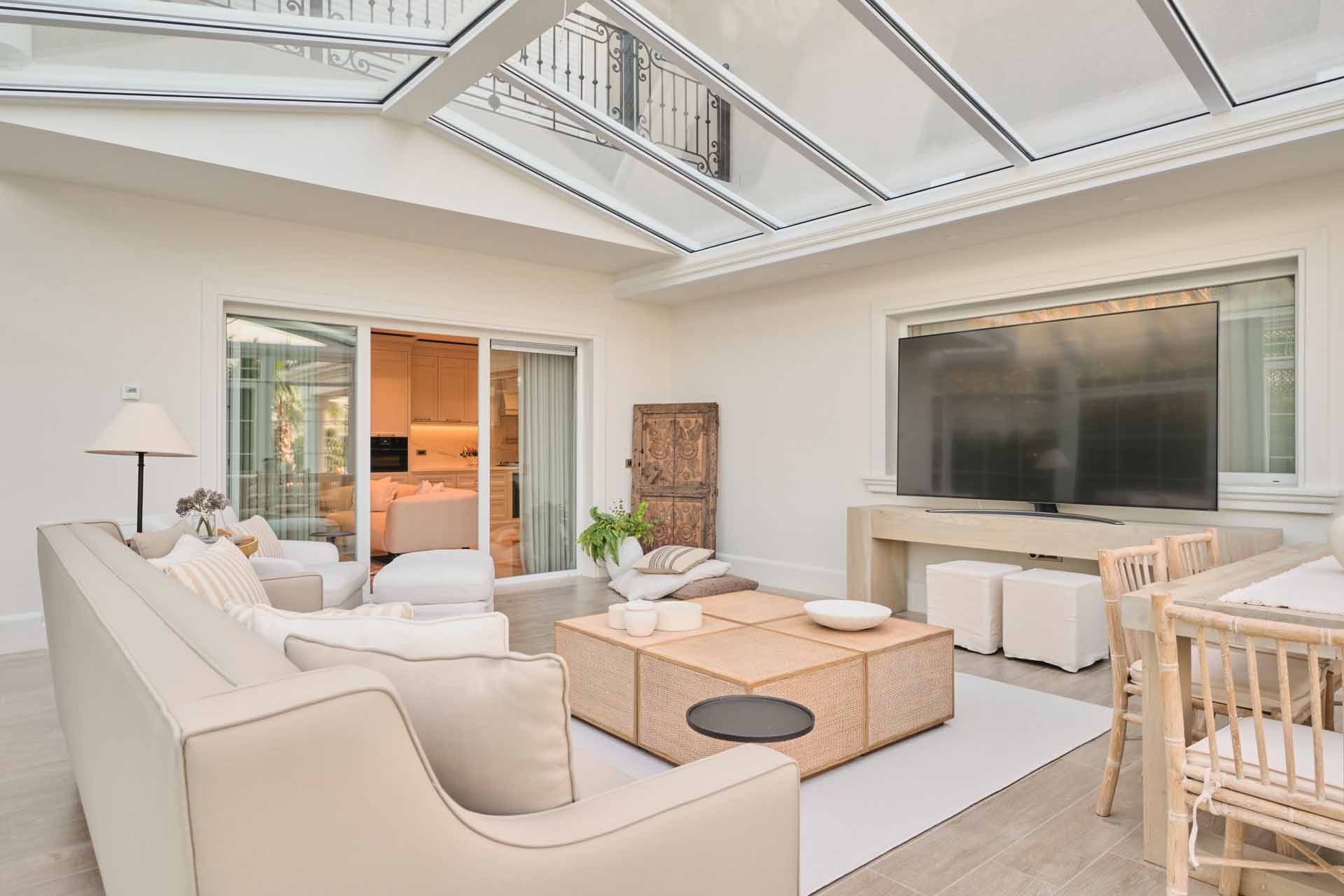
Expert Tips for Winter Garden Decoration
Winter garden design brings the comfort of your home closer to the garden or terrace. A glazed space for enjoying coffee, reading, or welcoming guests can become part of everyday life when furniture, lighting, and materials are chosen to suit its conditions.
Whether you have a small enclosed balcony, a spacious terrace, or a separate room overlooking the garden, start with how you want to use it. A winter garden used throughout the year has different requirements from a seating area enjoyed mainly during milder weather.
Where Should You Start with Winter Garden Design?
Before choosing furniture and accessories, assess the existing space. Daylight, opening windows, access from the house, and usable dimensions will all influence the layout.
Answer these questions during the planning stage:
- Will you use the space for relaxing, dining, working, or entertaining?
- How many people need to sit comfortably at the same time?
- At what times of day does the winter garden receive direct sunlight?
- How much clearance is needed around doors and opening windows?
- Do you need storage for cushions, throws, and serving accessories?
- Which existing furniture and flooring can be retained?
If you are considering a new glazed enclosure or structural work, develop the decorating plan alongside it. Glazing, shading, ventilation, and heating decisions should be coordinated with the furniture layout.
Plan Your Winter Garden Around Its Main Purpose
Trying to accommodate every activity in one winter garden can make the space feel crowded. Identify the activity you will enjoy most often, then use the remaining space for complementary functions.
A Space for Relaxing and Conversation
A comfortable sofa, one or two armchairs, and an accessible side or coffee table may be enough for everyday use. Arrange the seating to make the most of the view while allowing people to talk comfortably.
If you need to move a table or chair every time you open the garden door, reconsider the layout. Clear circulation matters more than fitting in extra furniture.
A Dining and Entertaining Area
If you plan to dine in your winter garden, consider access to the kitchen, the serving route, and the space needed to pull out chairs. Choose the table size based on both its footprint and the clearance required around it.
In a larger space, separate lighting can help define dining and seating areas. In a smaller winter garden, prioritizing one main function may create a more comfortable arrangement.
A Reading or Hobby Corner
An armchair, a small side table, and a reading lamp can create a quiet corner. When planning storage for books and hobby materials, consider exposure to direct sunlight, moisture, and temperature changes.
Small Winter Garden Decorating Ideas
Choosing appropriately sized furniture is the first step toward making a small winter garden more usable. Consider compact pieces that meet your needs without occupying the space required for movement.
- Choose one focal point: Build the layout around a compact seating group or dining corner.
- Use visually light furniture: Slim legs and simple outlines can help preserve views through the space.
- Consider side tables: Small, movable pieces can offer more flexibility than a large central coffee table.
- Combine seating and storage: A storage bench may work well along a suitable wall.
- Group plants together: Create a few considered arrangements instead of placing a separate pot in every available gap.
For example, a narrow, elongated space could accommodate seating for two at one end and a group of plants at the other. Keeping the route between them clear can make the area easier to use. Check how doors and windows open before committing to the arrangement.
How to Choose Winter Garden Furniture
When selecting winter garden furniture, consider whether the space is fully enclosed, how it is ventilated, and the conditions it experiences throughout the seasons. Furniture that performs well in a living room may have different maintenance needs in an area exposed to stronger sunlight or higher humidity.
Wood, Metal, and Woven Furniture
Wood furniture can introduce a natural texture, while metal pieces can offer slender profiles and simple lines. Rattan and other woven finishes can help connect the interior visually with the garden.
Look beyond appearance and check the product’s intended use. Natural rattan, synthetic weave, different wood species, and metal finishes do not have identical maintenance requirements. Use the manufacturer’s guidance to confirm whether a product suits the space.
Cushions and Upholstery
Consider seating comfort, cleaning methods, and exposure to sunlight when choosing cushions. Removable covers can make routine care easier.
If you use the space seasonally, plan where cushions and throws will be stored when they are not needed. Review fabric specifications and care instructions as well as colors and patterns.
Colors and Decorating Styles for a Winter Garden
Build a color palette that relates to both the interior of your home and the view outside. Surfaces do not need to match exactly. A shared wood tone, related textiles, or a repeated accent color can create continuity.
Modern Winter Garden Design
Simple furniture, a restrained palette, and uncluttered surfaces can create a modern look. Combine off-white, beige, or gray with wood, metal, and selected darker details.
Leave room for the view rather than filling every window with accessories. A few distinctive pieces can give the design a clearer identity.
A Natural and Welcoming Look
Wood textures, ceramic pots, and softly colored textiles can work together to create a natural atmosphere. Limiting the number of colors can help bring different textures into a coherent scheme.
Bohemian Winter Garden Decor
Patterned cushions, textured throws, and handmade accessories can introduce a bohemian character. Allow one or two pieces to stand out, with quieter surfaces around them, rather than using bold patterns at equal intensity throughout the space.
Choosing Flooring, Rugs, and Window Coverings
Choose flooring according to exposure to water, frequency of use, and cleaning needs. If the winter garden opens directly onto the garden, consider the dirt and moisture that footwear may bring inside.
A rug can visually connect the seating group. However, assess its cleaning and drying requirements if the space experiences damp conditions. Choose a size and position that will not interfere with doors or circulation.
When selecting blinds, curtains, or other shading, consider daylight control, privacy, and how the glazing opens. Vertical windows and a glazed roof may require different solutions. Check how the chosen system affects access, operation, and cleaning.
How Should a Winter Garden Be Lit?
Lighting allows you to enjoy a winter garden after daylight fades. Consider several light sources serving different purposes rather than relying on one bright fixture.
- Ambient lighting: Provides enough light to move comfortably around the space.
- Task lighting: Supports activities such as reading or dining.
- Accent lighting: Highlights a group of plants, a textured wall, or a decorative feature.
Check reflections in the glazing from your usual seating positions. Avoid placing light sources where they shine directly into your eyes or make the view difficult to enjoy.
Plan outlets and cable routes alongside the furniture layout. A qualified professional should assess the suitability of electrical products in areas that may be exposed to moisture or water.
Using Plants in a Winter Garden
Choose plants according to more than their decorative appearance. Direct sunlight, temperature changes throughout the day, and the time you can spend on care should guide your selection.
Before purchasing a plant, check its light, temperature, and watering requirements. Do not assume that every position near the glazing provides the same conditions.
- Place larger pots in corners where they will not obstruct movement.
- Combine plants of different heights to create balanced arrangements.
- Use suitable pots and saucers to help protect the floor during watering.
- Make sure plants remain easy to reach for routine care.
- Consider each plant’s needs when positioning it near heaters or air outlets.
Plan for Comfort Throughout the Year
Whether a winter garden can be used year-round depends on its construction and technical conditions as well as its decor. Glazing, frames, roofing, shading, ventilation, and heating need to be considered together.
If you notice condensation on the glazing or persistent dampness, changing the furniture will not address the underlying issue. Have the space assessed by a qualified professional to identify the cause.
Heating and cooling should not be selected solely according to floor area. Intended hours of use, the structure’s characteristics, and existing services also need to be taken into account.
Common Winter Garden Decorating Mistakes
- Adding too much furniture: Increasing seating capacity can make circulation and everyday use more difficult.
- Blocking opening windows: Furniture and plants should preserve access for ventilation and cleaning.
- Choosing materials only for their appearance: Sunlight, moisture, and maintenance requirements also matter.
- Leaving shading until the end: Solutions for glazed roofs and large windows should be considered early.
- Overlooking plant care: Decorative arrangements must still allow watering and maintenance.
- Losing the connection with the house: Shared colors and textures can help the winter garden feel like part of the home.
Frequently Asked Questions About Winter Garden Design
What furniture works well in a small winter garden?
A compact seating group, small side tables, or a bench along a suitable wall can work well. Consider the space needed to move around and use each piece, as well as its physical dimensions.
Can ordinary living room furniture be used in a winter garden?
That depends on temperature, humidity, and sunlight exposure. Check the materials and care requirements of the furniture you intend to use. Being fully enclosed does not necessarily mean a winter garden has the same conditions as a living room.
Which colors should you choose for a winter garden?
There is no single ideal palette. Consider daylight, existing flooring, the rest of your home, and personal preferences together. Restrained base colors can be complemented with plant greenery, wood textures, or selected accents.
How should you plan a winter garden decorating budget?
Separate any necessary work to the existing structure from decorative purchases. Prepare individual requirements for shading, lighting, flooring, furniture, textiles, and plants. Prioritize improvements that solve usability problems before adding finishing accessories.
Design Your Winter Garden as Part of Your Home
A well-planned winter garden has a layout that suits your routines and materials appropriate to its conditions. Considering furniture, plants, lighting, and shading together makes it easier to create a space you can enjoy in everyday life.
For ideas on connecting indoor and outdoor spaces, explore our villa decoration guide. You can also discover our interior design services to learn more about our approach.
To discuss your existing space and what you would like to achieve, contact Yasmina.